
Rotobrush Air Duct Cleaning in Knoxville: A Homeowner’s Guide
Rotobrush air duct cleaning in Knoxville typically costs $300–$600 for a residential system and works best on rigid sheet metal ductwork common in homes built before 1990 and after 2005. The method combines a rotating brush that physically contacts duct walls with simultaneous vacuum extraction, making it effective for caked-on dust and pet hair but potentially damaging to deteriorating flex duct or degraded insulation found in many 1990s-era Knoxville subdivisions. If you’d rather have a pro assess what method fits your home, call us at (855) 774-4207 for a free, no-pressure estimate.
What Rotobrush Equipment Actually Does
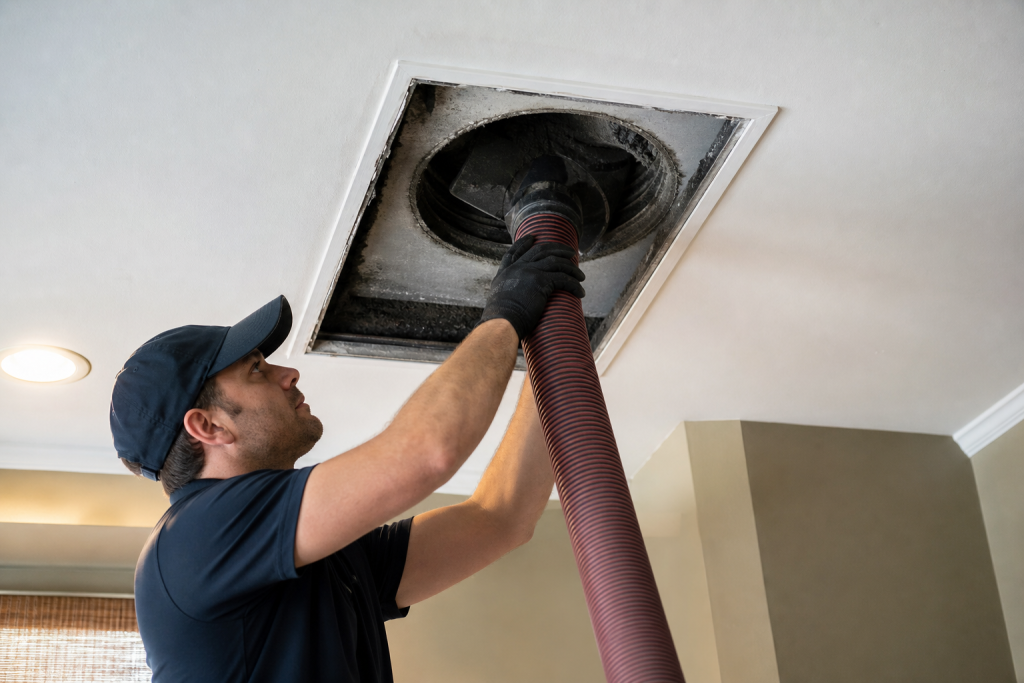
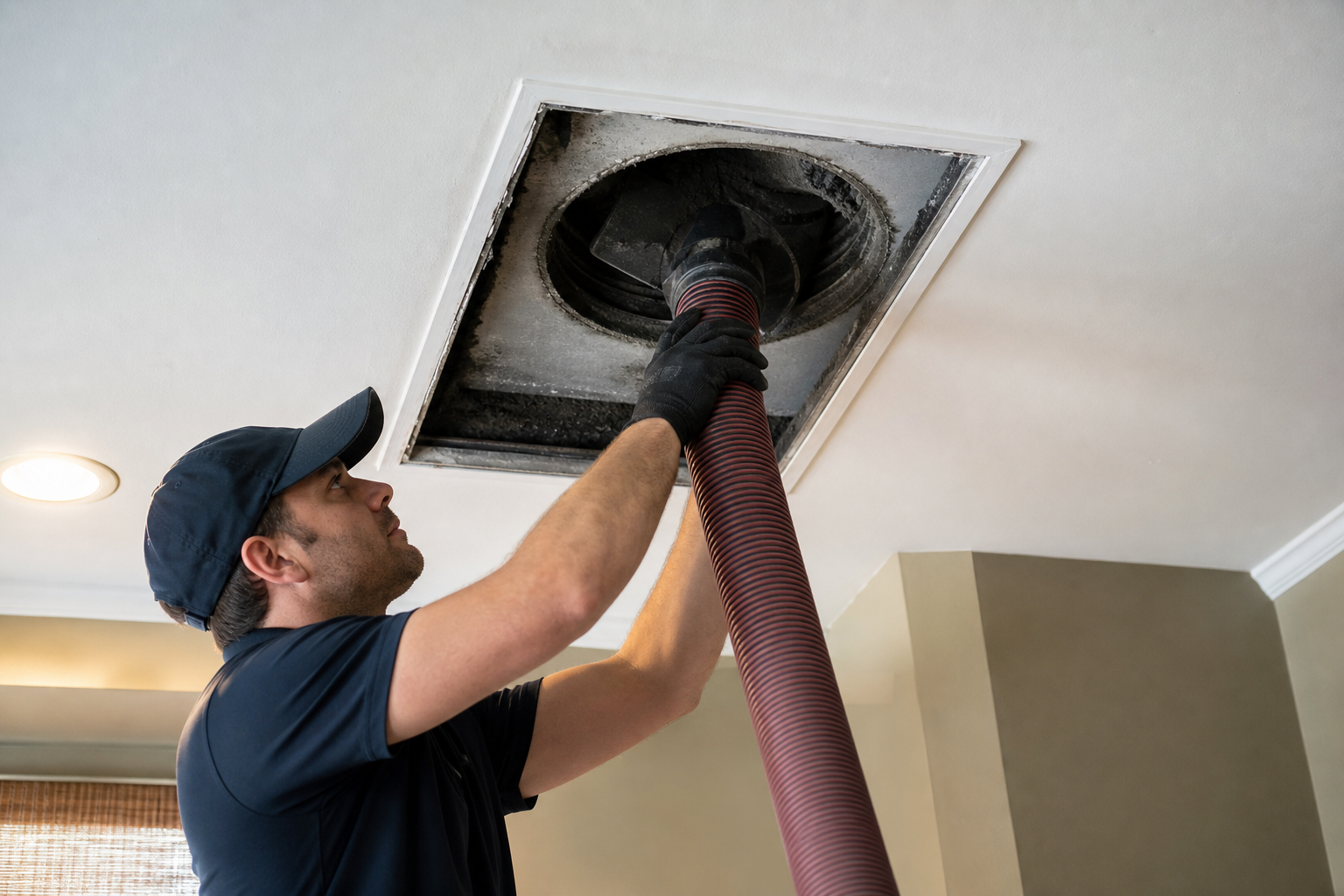
Rotobrush isn’t a cleaning company—it’s a specific brand of contact-cleaning equipment that’s been around since the late 1990s. The system sends a rotating bristle brush through your ductwork on a flexible cable while a vacuum nozzle at the tool head immediately captures dislodged debris. Think of it as a powered chimney sweep for your vents, with suction happening at the point of contact.
We run Rotobrush units alongside our Nikro negative-air machines on jobs where the ductwork justifies it. The brush provides mechanical agitation that compressed-air whips or simple vacuum suction can’t match for certain buildup types. We’ve found it particularly effective for:
- Sheet metal trunk lines with years of accumulated dust cake
- Main return plenums where pet hair mats against duct walls
- Galvanized steel ducts in older Sequoyah Hills and Fountain City homes with minimal internal insulation
- Post-renovation cleanup where drywall dust has settled and hardened
Where Rotobrush underperforms is in systems where the debris isn’t the problem—it’s the duct material itself. The brush can’t fix crushed flex duct, seal disconnected joints, or remove mold from porous fiberglass liner. That’s why we always inspect before we specify the method.
Knoxville’s Housing Stock: Which Duct Types Need Which Approach
Knoxville’s residential construction breaks into three distinct eras, and your duct type largely determines whether Rotobrush contact cleaning makes sense.
Pre-1990 homes (Sequoyah Hills, Old North Knoxville, Island Home): These typically have galvanized sheet metal ducts with minimal or no internal insulation. The metal is durable, the joints are often sealed with old fabric tape or mastic that’s failing, and the interiors can hold remarkable buildup. Rotobrush works well here—the metal walls can handle brush contact, and the mechanical agitation removes decades of accumulation. We regularly see 3–5 pounds of debris per trunk line in these homes.
1990–2010 subdivisions (Farragut, Hardin Valley, Powell): Flex duct became standard in this era, and much of it is now reaching end-of-life. The plastic liner becomes brittle, the internal fiberglass insulation degrades, and the wire helix can separate from the jacket. Running a powered brush through deteriorating flex duct can tear the liner, detach insulation, or create new leaks. In these homes, we typically use gentler negative-pressure methods with sealed access points, saving Rotobrush for any accessible sheet metal components.
Post-2010 builds (Turkey Creek area, new construction in Maryville corridor): Mixed construction—often sheet metal mains with flex duct branches. We assess each segment individually. The newer flex is usually sound enough for light contact cleaning, but we’re conservative with it.
Knoxville’s humidity swings matter too. Summer moisture can reactivate old dust into a paste that simple vacuuming won’t touch. That’s where Rotobrush agitation earns its keep on compatible ductwork.
The Setup That Matters More Than the Brand
Here’s what most homeowners—and frankly, some contractors—miss: the brush brand is less important than the containment and negative pressure protecting your home during the process.
A Rotobrush unit without proper containment is just a very expensive way to redistribute dust. The brush dislodges debris at the point of contact, but without sufficient airflow to carry particles to the collection unit, that debris becomes airborne inside your duct system and eventually settles back out through your vents.
What we verify on every job, regardless of whether we’re running Rotobrush or another method:
- Negative pressure at the main trunk: Our Nikro negative-air machines maintain sufficient CFM to ensure dislodged particles move toward collection, not your living room.
- Sealed access points: Every register boot and return grille gets sealed during cleaning so pressure stays directed.
- HEPA filtration on exhaust: Our Abatement Technologies filtration captures particles down to 0.3 microns. Without this, the machine exhausts fine dust back into your home or attic.
- Post-cleaning verification: We run a camera through representative duct sections so you see the result, not just take our word for it.
We’ve been called to homes in West Knoxville where a previous “Rotobrush cleaning” left the registers dirtier than before. In every case, the brush was present but the containment was absent. The homeowner paid for a brand name, not a proper system.
How to Vet a Contractor’s Rotobrush Claims
“We use Rotobrush technology” has become a marketing phrase that often means very little. Here’s how to separate actual equipment from vague branding:
- Ask for the model number. Current professional units are the Rotobrush Beast series or similar commercial-grade systems. If the contractor can’t name what they own, they may be renting or subcontracting.
- Request photos of their actual setup. A legitimate operator has photos of their truck-mounted or portable unit. Be wary of stock images from the manufacturer’s website.
- Ask what accompanies the Rotobrush. If they don’t mention negative-air machines, HEPA filtration, or sealed containment, they’re describing partial equipment, not a complete system.
- Verify they inspect before specifying. Any contractor who quotes a flat rate and method without seeing your duct configuration is guessing. We won’t specify Rotobrush without knowing what your ducts are made of.
We pulled a job in Bearden last month where a homeowner had paid $199 for a “premium Rotobrush cleaning” from a company that showed up with a shop vacuum and a handheld drill attachment. The “technician” was gone in 45 minutes. The ducts were still dirty, and the homeowner was out $199 plus our inspection fee to document what hadn’t been done. Eleven years in this trade, and that story still isn’t rare.
When Rotobrush Isn’t Enough: Full System Solutions
Sometimes the problem isn’t dirty ducts—it’s damaged ducts. Rotobrush cleaning won’t seal a disconnected joint, repair a crushed flex run, or address mold growth inside porous insulation. That’s where method flexibility matters more than equipment loyalty.
At Vanguard Air Duct Cleaning Knoxville home, we bring commercial-grade equipment and 11 years of focused duct-system experience to every job. Our full scope means we don’t clean around problems we find—we fix them. Air Duct Cleaning in Knoxville covers the cleaning itself, but we also handle Dryer Vent Cleaning in Knoxville for fire prevention, HVAC Cleaning in Knoxville for coil and blower maintenance, plus duct repair, sealing, and air quality sanitizing under one roof.
We clean it, we seal it, we certify it. You don’t need three contractors for one air system.
Key Takeaways
- Rotobrush is contact-cleaning equipment, not a company or a universal solution—it’s effective on rigid metal ducts, risky on deteriorating flex duct
- Knoxville’s pre-1990 sheet metal systems and post-2010 mixed construction typically tolerate Rotobrush well; 1990s–2000s flex duct often needs gentler methods
- Negative pressure, HEPA containment, and sealed access points matter more than the brush brand
- Verify actual equipment ownership and model numbers when a contractor leads with “Rotobrush technology”
- 912 homeowners have rated us 4.7 stars—consistent results across real Knoxville homes, not cherry-picked testimonials
The Bottom Line
Rotobrush equipment can deliver excellent results in the right Knoxville home and cause damage in the wrong one. The difference comes down to duct material, contractor honesty about limitations, and the containment system backing up the brush. Don’t pay a premium for a brand name without understanding what your ducts are made of and whether the full system is in place to protect your home.
If you’re in Knoxville and want an honest assessment of whether Rotobrush or another method fits your system, Vanguard Air Duct Cleaning Knoxville offers free estimates with no upsell pressure. The owner is on the job—Robert Garcia personally performs or oversees every inspection and cleaning. Call (855) 774-4207 to schedule yours.
Frequently Asked Questions
Rotobrush air duct cleaning in Knoxville typically runs $300–$600 for a standard residential system up to 2,500 square feet, with larger homes or systems requiring additional access points running $600–$900. The price varies based on duct accessibility, contamination level, and whether your system needs hybrid methods beyond brush cleaning alone. Call (855) 774-4207 for an exact quote—estimates are free.
No. Rotobrush contact cleaning is safe for rigid sheet metal and sound flex duct but can damage deteriorating flex duct, degraded internal insulation, or separated wire helixes common in 1990s–2000s Knoxville construction. A proper inspection should precede any method selection. If a contractor recommends Rotobrush without looking at your ducts first, that’s a red flag.
Rotobrush uses a powered rotating brush that physically contacts duct walls combined with immediate vacuum extraction, while “standard” cleaning may rely on compressed-air agitation or negative pressure alone without mechanical contact. The brush provides superior removal of caked-on debris but requires compatible duct material. The method is a tool selection, not an automatic upgrade.
Rotobrush mechanical cleaning can remove surface mold growth from non-porous metal ducts but cannot eliminate mold embedded in porous fiberglass insulation or flex duct liner. Where mold has penetrated porous material, the affected duct section typically needs replacement, not cleaning. We assess mold concerns during our initial inspection and specify appropriate remediation—never just a cleaning when the material itself is compromised.
Written by Robert Garcia, Owner & Lead Technician at Vanguard Air Duct Cleaning Knoxville, serving Knoxville since 2015.
Need Air Duct Cleaning Help?
Call Vanguard Air Duct Cleaning Knoxville — licensed & insured, available 24/7 in Knoxville.
(855) 774-4207